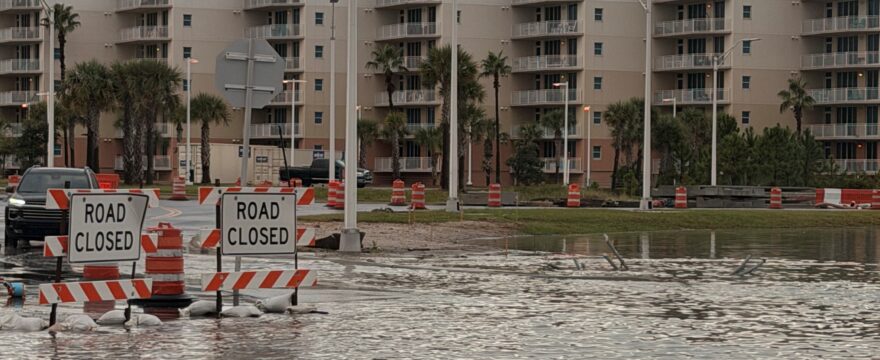
If you tried driving anywhere near the Brooks Bridge earlier this month, you already know the story. What should have been a quick 30-minute errand across Fort Walton Beach/Okaloosa Island/Destin turned into a grueling 3-hour standstill. Flash flooding on October 5th brought traffic to a screeching halt, stranded drivers, and completely derailed entire days for thousands of local residents.
It was a stark, frustrating reminder of how fast water can take control.
Sitting in that gridlock got us thinking: If a few inches of unexpected water on a roadway can derail our entire day, what could just a small amount of flooding do inside your home?
1 Inch of Water = $25,000+ in Damage
When most people think of flood damage, they picture major hurricane storm surges or rising waters creeping up over the roof line. But the reality on the Emerald Coast is much different.
According to FEMA, just one single inch of standing water inside a home can cause more than $25,000 in structural and personal property damage.
- Drywall and insulation absorb water like a sponge.
- Flooring, baseboards, and cabinetry warp almost instantly.
- Electrical systems, air ducts, and appliances at ground level get ruined.
- Mold begins to set in within 24 to 48 hours.
Without proper protection, paying for those repairs comes straight out of your pocket.
The Biggest Myth: “I’m in Zone X, So I Don’t Need Flood Insurance”
One of the most dangerous misnomers in Florida real estate and insurance is the term “Preferred Flood Zone” or “Zone X.”
Many homeowners believe that if their mortgage lender doesn’t require flood insurance, they aren’t at risk. That couldn’t be further from the truth.
Here are the facts:
- Standard Homeowners Insurance DOES NOT Cover Flooding: Your standard property policy covers windstorms, fire, and sudden internal pipe bursts—but it explicitly excludes damage from rising groundwater, heavy surface rainfall, or storm surge.
- Over 20% of All Flood Claims Come from Low-Risk Zones: You don’t need to live on the Sound, Choctawhatchee Bay, or the Gulf of Mexico to experience a flood. Poor drainage, saturated ground, and localized flash rainstorms—like what we experienced this month—cause severe flooding in neighborhoods miles away from water.
- Disaster Relief Is NOT Insurance: Government assistance after a storm usually comes in the form of low-interest federal loans that you must pay back with interest, not tax-free claim payouts to restore your home.
Flood Insurance Is More Flexible & Affordable Than You Think
In the past, homeowners relied solely on the National Flood Insurance Program (NFIP). Today, as an independent agency, Harris Insurance shops both the NFIP and a wide network of private flood insurance carriers. Flood insurance is more accessible than ever for Florida Property Owners.
Private flood coverage can provide:
- Lower Premiums for non-high-risk properties.
- Higher Limits for high-value home replacement and personal belongings.
- Shorter Waiting Periods (often 7 to 14 days, compared to the standard 30-day NFIP waiting period).
- Additional Living Expenses (ALE) coverage so you can afford a rental home if yours becomes uninhabitable during repairs.
Protect Your Home Before the Next Rainstorm Hits
This month’s traffic jam around Brooks Bridge’s standing water was a harmless inconvenience compared to coming home to standing water in your living room. The good news? Securing flood coverage for your home is fast, straightforward, and surprisingly affordable.
Don’t wait for the next heavy downpour or tropical system to review your policy.
Get a No-Obligation Flood Insurance Quote Today!
Protect your biggest investment with local experts who understand Florida property risks inside and out.
💻 Request Online: HarrisInsurance.com
📞 Call Us: (850) 244-2111
📍 Visit Us: Downtown Fort Walton Beach, FL

LEGAL DISCLAIMER
Views expressed here do not constitute legal advice. The information contained herein is for general guidance of matter only and not for the purpose of providing legal advice. Discussion of insurance policy language is descriptive only. Every policy has different policy language. Coverage afforded under any insurance policy issued is subject to individual policy terms and conditions. Please refer to your policy for the actual language.