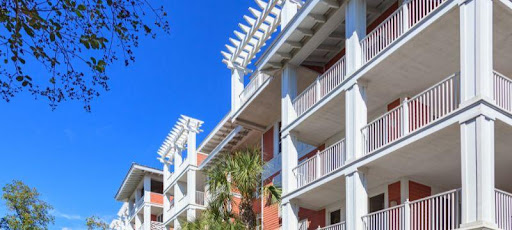
Florida Statute § 768.0706 (Multifamily Residential Property Safety and Security; Presumption Against Liability)—enacted as part of Florida’s landmark 2023 tort reform (HB 837)—is one of the most powerful risk-management tools ever handed to habitational property owners, Condominium Associations (COAs), and apartment operators in Florida.
If the owner or principal operator of a qualifying multifamily property complies with the statute’s security, assessment, and training requirements, they receive a legal presumption against liability in any negligent security lawsuit involving criminal acts committed on the premises by third parties (who are not employees or agents of the owner or operator).
1. Which Properties Qualify?
Under F.S. § 768.0706(1)(b), a “multifamily residential property” is defined as a residential building, or group of residential buildings—such as apartments, townhouses, or condominiums—consisting of at least five (5) dwelling units on a particular parcel (defined by a single county property appraiser parcel ID number).
2. The Three Pillars of Compliance
To earn the statutory presumption against liability, a property owner or association must prove compliance across three mandatory categories: Physical Security Measures, a CPTED Assessment, and Employee Training.
Pillar 1: The 7 Physical Security Measures (F.S. § 768.0706(2)(a))
The property must “substantially implement” all seven of the following physical standards:
| # | Statutory Requirement | Technical / Underwriting Standard |
|---|---|---|
| 1 | Security Camera System | Installed at every point of entry and exit. Must actively record and maintain retrievable video footage for at least 30 days to assist in offender identification and apprehension. |
| 2 | Lighted Parking Lot | Illuminated at an intensity of at least an average of 1.8 foot-candles per square foot at 18 inches above the surface from dusk until dawn (or controlled by a photocell/electronic device that provides dusk-to-dawn light). |
| 3 | Common Area Lighting | Dusk-to-dawn lighting (or photocell-controlled) in all walkways, laundry rooms, common areas, and porches. |
| 4 | Unit Deadbolts | At least a 1-inch deadbolt installed in each dwelling unit entry door. |
| 5 | Window & Door Locks | A functioning locking device on each window, each exterior sliding door, and any other doors not used for community purposes. |
| 6 | Pool Area Access Control | Locked gates with key or fob access along all swimming pool fence areas. |
| 7 | Door Viewers (Peepholes) | A peephole or door viewer on each dwelling unit door that does not include a window or does not have a window next to the door. |
Pillar 2: The Certified CPTED Assessment (F.S. § 768.0706(2)(b))
- The Requirement: Since the January 1, 2025 statutory deadline, the owner or operator must maintain a completed Crime Prevention Through Environmental Design (CPTED) assessment that is no more than 3 years old for the property, and remain in substantial compliance with that assessment.
- Who Must Perform It: A CPTED assessment cannot be completed by a standard security guard vendor, camera installer, or insurance inspector. By statute, it must be performed by either:
- A law enforcement agency, OR
- A certified Florida Crime Prevention Through Environmental Design Practitioner (FCP) designated by the Florida Crime Prevention Training Institute of the Department of Legal Affairs (Florida Attorney General’s Office).
Pillar 3: Documented Employee Training (F.S. § 768.0706(2)(c))
- The Requirement: Since January 1, 2025, the owner or principal operator must provide proper crime deterrence and safety training to all current employees.
- New Hires & Renewal: Any newly hired employee must complete the training within 60 days of their hire date.
- Curriculum: The training must familiarize employees with the seven statutory security measures above and must be reviewed and updated at least every 3 years.
3. Why This Matters in a Lawsuit & For Your Insurance Rates
A. Shifting the Burden in Court
Before this statute, if a violent crime occurred in an apartment parking lot or condo garage, a plaintiff’s attorney only had to find one broken bulb or argue that the property “should have hired 24/7 armed guards” to drag the owner or association into a multi-million-dollar jury trial.
- Starting With a Legal Shield: Once a property owner or association proves it has substantially implemented the requirements of F.S. § 768.0706, the court begins with the legal presumption that the property owner did not breach their duty of care.
- Positioning for Early Dismissal: Because the plaintiff now faces the steep hurdle of either disproving your documented compliance or overcoming a statutory presumption in Florida, defense counsel is positioned far better to win early Summary Judgment or resolve claims for nuisance value.
- Stopping “Nuclear Verdicts”: Combined with F.S. § 768.0701 (which puts the violent criminal directly on the jury verdict form to apportion fault), your exposure to runaway jury verdicts is drastically reduced.
B. How Harris Insurance Uses Safe Harbor Compliance to Lower Your GL & Umbrella Rates
In today’s hard casualty market—where surplus lines carriers routinely attach Assault & Battery (A&B) Exclusions, Firearms Exclusions, or 25k/50k Sub-limits—F.S. § 768.0706 is our strongest underwriting bargaining chip when negotiating on your behalf:
- Removing or Raising Assault & Battery Sub-limits: When our team submits your habitational risk to major wholesale and admitted package markets (such as CRC, Amwins, and RT Specialty), attaching your property’s 3-year CPTED certificate, photometric lighting report (confirming 1.8 foot-candles), and 30-day NVR/cloud camera verification gives underwriters the documentation they need to justify full General Liability limits or higher A&B sub-limits.
- Unlocking Excess / Umbrella Capacity: Umbrella underwriters frequently decline Florida apartments and COAs over negligent security fears. Documented Safe Harbor compliance proves to carriers that your property has an affirmative statutory defense ready to deploy.
4. The 4 Common “Gotchas” Where Properties Fail the Audit
When we advise COA boards and apartment owners across the Gulf Coast, we warn them to watch out for four common traps that plaintiff attorneys immediately target to strip away the Safe Harbor shield:
- The “7-Day Camera Loop” Trap: Most off-the-shelf cloud cameras or older DVRs overwrite video after 7 or 14 days. If your system only holds 14 days of footage, the property fails Pillar 1 (the 30-day retrievable requirement), and the statutory presumption is lost.
- The “Unit Owner Door” Dilemma for COAs: In a Condominium Association (unlike an apartment complex), unit entry doors, sliding doors, and windows are often maintained by individual unit owners rather than the board. For a COA to claim the Safe Harbor shield, the board should use its statutory right of access and inspection to verify—or pass a community rule requiring—1-inch deadbolts, window locks, and peepholes on all units.
- Unverified Parking Lot Lighting: Having lights “turned on” isn’t enough. If a shooting happens in a dark corner of the lot, the plaintiff’s expert will bring a light meter. Properties need a documented photometric foot-candle reading showing an average of 1.8 foot-candles at 18 inches off the asphalt, plus a weekly or monthly night-light maintenance log to prove burned-out bulbs are replaced promptly.
- The “Paper CPTED” Trap: The statute requires the property to remain in substantial compliance with its CPTED assessment. If a CPTED practitioner writes a report recommending that overgrown hedges by the pool be trimmed below 3 feet and a blind-spot camera be added—and the board puts that report in a drawer without doing the work—a plaintiff’s attorney will subpoena that exact CPTED report and use it as a roadmap of “known, ignored hazards” against the board.
Ready to Turn Your Property’s Security Into Lower Insurance Premiums?
Protecting Gulf Coast properties since 1965, the commercial risk team at Harris Insurance helps Florida apartment owners and Condominium Associations navigate F.S. § 768.0706 compliance and leverage their documentation for broader coverage and better rates at renewal.
- Call Us: (850) 244-2111
- Email: Service@HarrisInsurance.com
- Visit: 123 Miracle Strip Parkway S.E., Fort Walton Beach, FL 32548 | www.HarrisInsurance.com
Disclaimer: This article is provided for informational and risk-management purposes only and does not constitute legal advice. Property owners and associations should consult qualified Florida legal counsel and a certified CPTED practitioner to verify statutory compliance for their specific property.
LEGAL DISCLAIMER
Views expressed here do not constitute legal advice. The information contained herein is for general guidance of matter only and not for the purpose of providing legal advice. Discussion of insurance policy language is descriptive only. Every policy has different policy language. Coverage afforded under any insurance policy issued is subject to individual policy terms and conditions. Please refer to your policy for the actual language.